

Flights from Hong Kong to Nantong: Airfares, Attractions, Food, Hotels and Travel Guide
Great Fares from Hong Kong to Nantong and Nantong Travel Information
Nanjing and Suzhou often come to mind when planning a trip to Jiangsu, but Nantong has plenty of its own to offer. Located where the Yangtze River meets the Yellow Sea, the city is home to Chinese Mainland's first public museum and the Haohe River, a well-preserved ancient moat that encircles the old town. Zhang Jian, an industrialist who came first in the imperial examinations, spent thirty years planning and developing the old town, which architect Wu Liangyong later described as Chinese Mainland's first modern city. From historic streets and nearby ancient towns to riverside hills, Nantong rewards a slower pace. A two- or three-day visit gives you time to explore the city's modernisation through its museums, stroll along the Haohe River as the evening lights come on, and enjoy a bowl of tiaomian noodles on Sijie Street (Temple Street). For a first independent trip to Nantong, these sights make a varied, manageable itinerary.
HK Express operates the exclusive direct route from Hong Kong to Nantong, with a flight time of about 2 hours 30 minutes. For bringing blue calico and Xiting crispy biscuits back to Hong Kong, the Essential fare includes one 20 kg checked bag, while the Max fare includes one 32 kg checked bag and standard seat selection, allowing more room for the return journey. Nantong's high-speed rail network connects with the wider Yangtze River Delta. With more time, a multi-city itinerary can take in the Jiangnan garden scenery of Shuihui Garden in Rugao, or a leisurely water-town visit to Tongxiang.
Recommended Attractions and Activities in Nantong
From Chinese Mainland's first public museum to historic districts that trace Nantong's modern industrial development, the city's attractions cover a range of interests. The sights below are arranged by theme and can be combined according to individual interests and the length of the trip:
Haohe River Scenic Area | An evening boat trip past the illuminated old town
The Haohe River is one of Chinese Mainland's best-preserved ancient moats, still encircling Nantong's old town. Nearly twenty museums and historic buildings line its banks, including Nantong Museum and the Nantong Blue Calico Museum. Explore the riverside paths by day, or take an evening cruise on a traditional sightseeing boat to see Wenfeng Pagoda reflected in the water and the buildings illuminated along both banks. A walk at sunset followed by the western-route night cruise, which takes about an hour, makes a varied half-day itinerary.
Langshan Mountain Scenic Area | Hilltop views across the Yangtze River
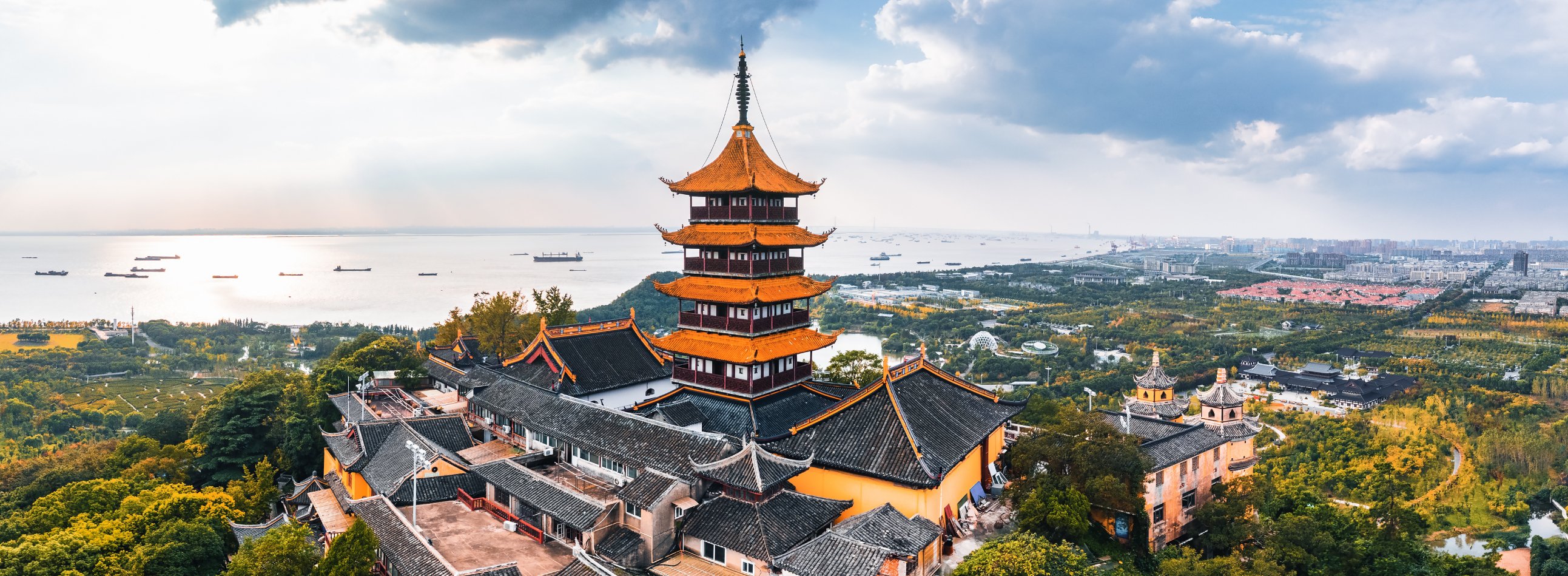
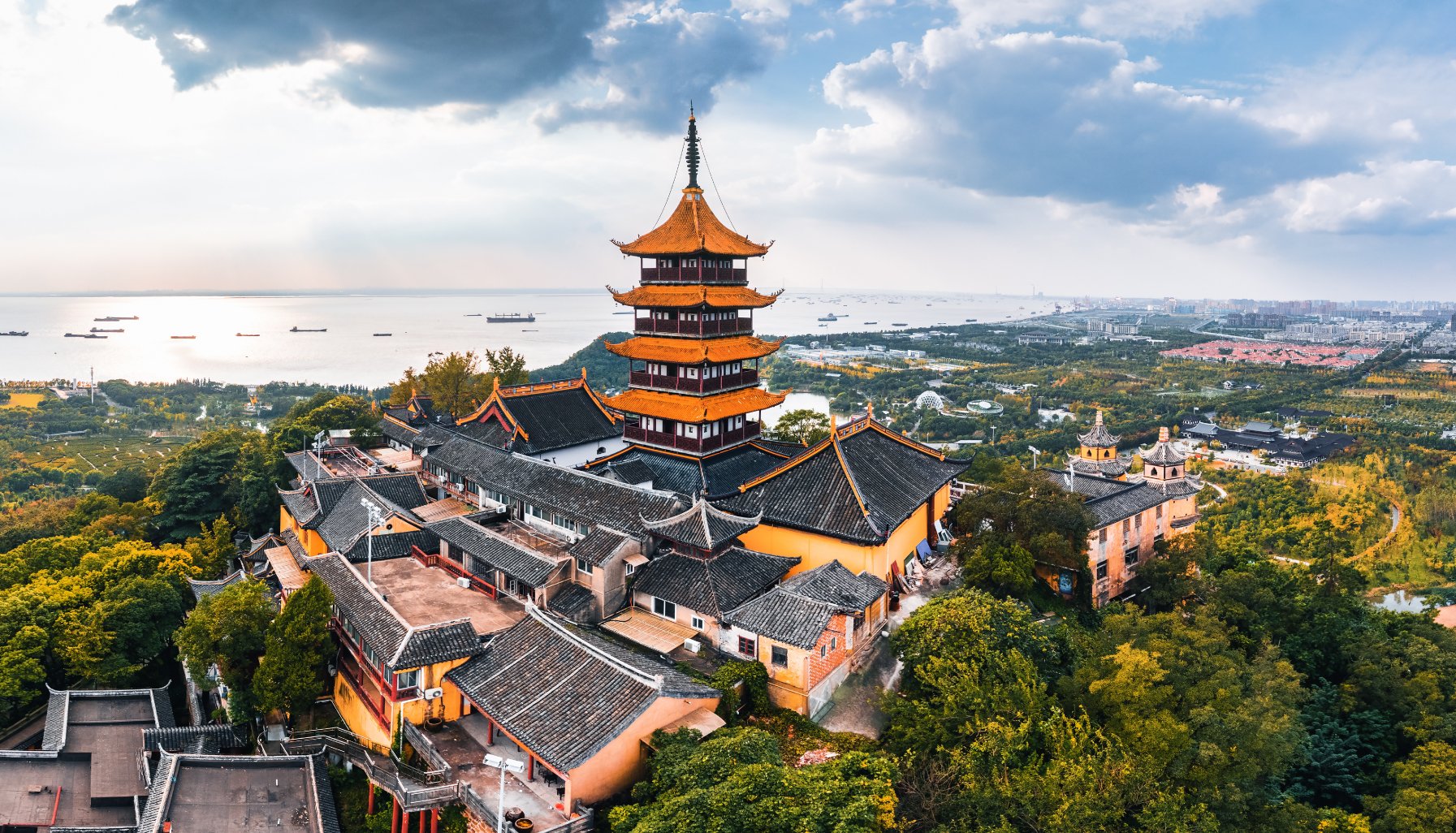
Langshan rises only a little over one hundred metres above sea level, yet is known locally as the 'foremost mountain where the river meets the sea'. The summit overlooks Nantong to the north and opens onto broad views of the Yangtze River meeting the sky to the south. Guangjiao Temple, first established in the Tang dynasty, stands on the hill, and its bells can be heard along the uphill paths. At the foot of the hill is the tomb of Luo Binwang, author of the poem Ode to the Goose. Admission is CNY 70 in the peak season (February to June and October) and CNY 50 in the off-peak season (January, July to September, and November to December). Starting from the East Gate, a visit takes about 2 to 3 hours.
Nantong Museum | A visit to Chinese Mainland's first public museum
Founded by Zhang Jian in 1905, Nantong Museum was the first public museum established by a Chinese founder, predating the Palace Museum by about twenty years. It combines exhibition halls with landscaped gardens. Admission is free, although some special exhibitions and areas may carry a charge, and the museum closes on Mondays. Haonan Villa, Zhang Jian's former residence within the grounds, blends Chinese and Western architectural features. Together with the century-old wisteria in the gardens, it is a popular photography spot. A recent special exhibition, Jingshi Jimin (Statecraft and Public Wellbeing), brought together more than one hundred artefacts from several museums and cultural institutions. After the visit, Sijie Street is within walking distance for snacks in the old town.
Tangzha Ancient Town | Modern industrial heritage around the former Dasheng Cotton Mills
Tangzha is where Zhang Jian founded the Dasheng Cotton Mills, and its historic buildings and industrial sites tell the story of Nantong's modern textile industry. Preparations to establish the mill began in 1895, and its history reflects the development of the local textile industry. A walk through Tangzha offers a look at this history through its older buildings and industrial remains. Opening arrangements for individual buildings should be checked before departure.
Erjia Ancient Town | Hand-dyed blue calico to take home
Erjia is one of the places where blue calico originated. This traditional printing and dyeing craft is listed as national intangible cultural heritage. The town's workshops still use natural indigo dye and more than ten manual stages, including stencil cutting, resist-paste application and dyeing. Under the guidance of experienced craftspeople, visitors can dye a square handkerchief or cloth bag as a souvenir. Nearby Yuxi Old Street dates to the late Tang dynasty. Its flagstones are laid in a pattern resembling dragon scales, while old wells, ceremonial archways, grey-tiled roofs and white walls remain well preserved. The area is relatively lightly commercialised and suits a half-day visit.
Zhouji Green Expo Park | Plants, nature and a leisurely family outing
Zhouji Green Expo Park (also known as Zhouji Green Expo Garden) is a family-friendly place to explore plants and nature. Its tropical plant pavilion and themed gardens offer plenty to discover on a leisurely walk, while children's play facilities provide additional activities. Plan your visit around your family's interests and pace, and check the latest opening hours and operating arrangements for individual facilities before you go.
Nearby Cities from Nantong: Multi-City Itineraries
High-speed trains from Nantong West Railway Station connect with nearby cities, making it possible to plan a multi-city trip around the length of the holiday and individual interests. The journey times below are for reference only; actual times depend on the stations and train services:
Rugao (from about 25 minutes by high-speed rail; allow half a day to a full day): This small city in central Jiangsu has a relaxed pace. Visit Shuihui Garden, associated with the late Ming scholar Mao Pijiang and Dong Xiaowan, where pavilions and terraces frame changing views along the paths. For lunch, explore the old town and try crab roe buns with thin wrappers and a rich, savoury broth, or a bowl of tiaomian noodles.
Zhenjiang (from about 2 hours by high-speed rail; a one-day itinerary suggested): This thousand-year-old riverside city combines hills and water. Jinshan Temple, Xijin Ferry Ancient Street and Beigu Hill are all within the urban area and can be visited in a day. Xijin Ferry takes on a different atmosphere when its lights come on after dark. Local flavours include Zhenjiang pot-cover noodles and yaorou, a pressed pork dish.
Tongxiang (from about 2 hours 30 minutes by high-speed rail; a one- to two-day itinerary suggested): Many travellers know Tongxiang through Wuzhen, but the city itself also has places to explore. Phoenix Lake is a large ecological lake with free admission, space for cycling and picnics, and lotus flowers filling its waters in spring and summer. Puyuan Fashion Ancient Town has a moderate level of commercial development, with traditional architecture to explore by day and illuminated streets to stroll through at night. It is worth allowing time for a visit. The Former Residence of Feng Zikai is also in the city and suits an unhurried look around.
Wuxi and Changzhou: HK Express operates direct flights between Hong Kong and both Wuxi and Changzhou. Alongside high-speed rail trips to nearby cities, flight schedules may allow an itinerary arriving in Nantong and returning to Hong Kong from Wuxi or Changzhou, covering several cities with less backtracking. The routes below are for itinerary planning only. Actual flights and seat availability depend on the selected travel dates.
Wuxi: One option is to fly from Hong Kong to Nantong, visit Nantong and Wuxi, then return to Hong Kong on a direct flight from Sunan Shuofang International Airport in Wuxi. From Haohe River Scenic Area in Nantong, mapping tools estimate the drive to Wuxi at about 1 hour 27 minutes. A walk through Huishan Ancient Town offers historic architecture and garden scenery, with a sense of Jiangnan's history and culture. Actual journey times depend on the departure point, route and traffic conditions.
Changzhou: An itinerary can begin with a flight from Hong Kong to Nantong, followed by a visit to Changzhou. China Dinosaur Park offers themed rides, while Tianning Temple provides a quieter visit among historic temple buildings, showing both sides of the city. The return journey to Hong Kong can be made on a direct flight from Changzhou Benniu International Airport. Driving times from Nantong to Changzhou depend on the starting and finishing points and road conditions; some routes are estimated to take more than 2 hours. Sufficient time should be allowed for the journey to the airport and check-in.
Signature Food and Souvenirs in Nantong
Seafood & freshwater delicacies: Nantong cuisine centres on fish and shellfish from the rivers and sea, with relatively light seasoning that brings out the ingredients' natural flavours. Sizzling-plate clams are a common order; the clams are celebrated locally for their fresh flavour, and hot-plate cooking highlights their sweetness. Hairtail cooked in oil uses fish delivered directly from Lusi Fishing Port, prized for its tender, delicate flesh. Langshan chicken is protected under China's geographical indication system. The chicken is tender when stewed in a clear broth and is often served in a casserole. Braised pufferfish is a spring speciality, particularly plump around the Qingming Festival. Long-established restaurants with the relevant licences are recommended for this dish.
Breakfast and street snacks: Street-side breakfast stalls offer a close look at local food culture. Sihailou Restaurant's crab roe soup dumplings have soft wrappers and a rich, savoury broth. At Wang Han Shaobing Shop, gangpanbing, a local baked flatbread, is crisp and flaky, while huojiao, fried dumplings, combine a crisp casing with a tender, juicy filling. Nantong tiaomian, also called Caogong noodles, has springy noodles and a clear, fresh-tasting broth. A bowl served with a piece of xiejiao, a diamond-shaped sesame flatbread, makes a typical Nantong breakfast. In the evening, food stalls on Sijie Street serve small wontons, stinky tofu and shaobing flatbreads amid the everyday bustle of the old town.
Recommended souvenirs: Xiting crispy biscuits originated in the Qing dynasty and are made through multiple manual stages, giving them distinct layers and a crisp, light texture. Tongzhou yingao, a steamed rice cake with more than 150 years of history, is soft and white with an osmanthus-flavoured sweet bean filling, and is listed as provincial intangible cultural heritage. Blue calico workshops in Erjia sell hand-dyed square handkerchiefs, cloth bags and craft products, with a better texture than the machine-made imitations found at scenic sites. For carrying more souvenirs home, the Essential and Max fares include one 20 kg or one 32 kg checked bag respectively.
A note: When buying souvenirs or food items, travellers should check and observe in advance the import declaration rules and plant and animal clearance restrictions of their final destination.
Nantong Xingdong International Airport Transportation
Nantong Xingdong International Airport, also known as Nantong Airport, is in Tongzhou District and is an important airport for the northern Yangtze River Delta. The options below connect the airport with the main urban areas and can be chosen according to the itinerary and amount of luggage:
To Chongchuan District's old town around the Haohe River: Bus 611 runs to the Metro supermarket stop from 05:30 to 19:20, about every 15 to 30 minutes, with onward connections to other parts of the city. Another option is Bus 622 to Cha'andian Metro Station, changing to Nantong Metro Line 1 for the city centre.
To Nantong West Railway Station: Bus 803 runs directly to the station at a fare of CNY 6, convenient for same-day high-speed rail connections to other cities.
Ride-hailing or taxi: The journey takes about 30 to 40 minutes and costs around CNY 60, making it suitable for groups or travellers with bulky luggage.
A note: Bus frequencies and fares may change, so the airport's and Nantong bus operator's latest official information should be checked before departure. Nantong Metro has Lines 1 and 2. Line 1 is about 39 kilometres long with 28 stations. Fares are distance-based, starting at CNY 2 for the first 6 kilometres and rising to a maximum of CNY 7. Metro routes and fares may be adjusted; the latest official announcements apply.
Best Time to Visit Nantong and Travel Tips
Nantong has a northern subtropical monsoon climate with a strong maritime influence and four distinct seasons, each with a different character. The seasonal tips below can help with itinerary planning before departure:
Spring (March to May): The weather is pleasant, with magnolias flowering in Seyuan Garden and cherry blossom on Kaisha Island. Conditions can change quickly, so a light jacket and rain gear are recommended.
Summer (June to August): Temperatures often exceed 35°C, and high humidity makes the heat feel more oppressive. June and July fall within the plum rain season, when humidity frequently exceeds 85%, so more indoor activities are suggested. Options include Nantong Museum and the indoor plant pavilions at Zhouji Green Expo Park. Opening arrangements are subject to the attractions' announcements.
Autumn (September to November): Late September to early November is particularly suitable for travel. The plum rain season and humid summer heat have passed, rainfall eases, and the weather is generally clear with comfortable temperatures. This suits outdoor activities, from a walk beside the Haohe River to a climb up Langshan.
Winter (December to February): January averages about 3°C, and snow is rare, but damp, windy weather often makes it feel colder than the actual temperature. The season suits exploring the old town and visiting museums. Travellers used to Hong Kong's climate should bring a thick coat and warm, wind-resistant clothing. For additional winter clothing, the Essential fare includes one 20 kg checked bag and the Max fare includes one 32 kg checked bag.
Accommodation in Nantong
Chongchuan District's old town and the Haohe River area: The preferred base for most visitors. Nantong Museum, Haohe River Scenic Area and Sijie Street are all within walking distance, with plenty of restaurants and shops nearby. Accommodation ranges from budget options to upmarket hotels, some with Yangtze River views. The area suits first-time visitors whose main focus is sightseeing.
Around Tangzha Ancient Town: This area suits travellers looking for distinctive accommodation. Garden-style guesthouses with white walls, dark-tiled roofs, small bridges and flowing water sit within the century-old industrial district, reflecting the character of Jiangnan. Evenings can be spent over tea in a courtyard, and nearby restaurants serve local home-style dishes.
Around Nantong West Railway Station: A practical base for high-speed rail trips to other cities. The area has several budget hotels and is about 20 minutes by road from the city centre. For an early train to Rugao, Zhenjiang or Tongxiang the next morning, staying here saves time travelling to and from the station.
Practical Travel Information for Nantong
Currency
Chinese Yuan (CNY)
Electricity
220V 50Hz
Language
Mandarin Chinese; the local dialect is Nantong dialect, part of the Jianghuai Mandarin group
Timezone
China, UTC+8
Telephone code
+86 (Nantong area code: 0513)
Mobile payment and transport tips for non-local travellers
Mobile payments are widely used across mainland China. Before you travel, consider setting up AlipayHK or WeChat Pay HK for cross-border payments, or linking a supported international credit card to the mainland version of Alipay or WeChat. Supported cards, account requirements and available services vary by app, so check your chosen provider's latest guidance. For getting around the city, the DiDi or Amap ride-hailing mini-programs can be used to request a car, with the fare deducted automatically from the e-wallet.
FAQs about Travelling to Nantong
How long does the flight from Hong Kong to Nantong take?
The direct HK Express flight to Nantong Xingdong International Airport takes about 2 hours 30 minutes. Actual services and flight times vary by season, so the latest flight information should be checked before booking.
Is flying or high-speed rail more convenient from Hong Kong to Nantong?
In terms of journey time, a direct flight is clearly quicker. The exclusive HK Express route from Hong Kong to Nantong takes about 2 hours 30 minutes, and a morning departure allows sightseeing to begin that afternoon, which suits a short break. There is no direct high-speed rail service from Hong Kong West Kowloon to Nantong. A change at Shenzhen North or Guangzhou South is required, and the full journey generally takes more than seven hours, making it suitable only for travellers with more time.
How many days should a Nantong itinerary allow?
Allow two to three days for your first Nantong itinerary. In two days, you can visit the Haohe River, Nantong Museum, Langshan and Tangzha Ancient Town, with time to try snacks on Sijie Street. A third day gives you time for a blue calico dyeing session in Erjia or a half-day visit to Shuihui Garden in Rugao. If you also plan to visit Tongxiang or Zhenjiang, allow four to five days for a more relaxed trip.
Which attractions in Nantong are worth visiting?
Among Nantong's attractions, an evening cruise on the Haohe River suits travellers who enjoy city walks and night views, while Langshan offers hilltop views of the Yangtze River. Nantong Museum explores modern history through its collections, and the blue calico workshops in Erjia provide a hands-on introduction to a traditional intangible cultural heritage craft. Families can see the plant displays at Zhouji Green Expo Park and choose activities according to their interests.
Which district in Nantong is the most convenient to stay in?
For sightseeing, the Haohe River area in Chongchuan District has the widest choice of hotels and major sights within walking distance. Staying near Nantong West Railway Station saves the most time for high-speed rail journeys. For a quieter, more distinctive stay, the garden-style guesthouses in Tangzha Ancient Town are another option.
Is Nantong suitable for family travel?
Nantong has several attractions suited to families. Zhouji Green Expo Park combines plant pavilions, landscaped gardens and children's play facilities, allowing children to learn about nature while playing. Seyuan Garden also has landscaped grounds suited to a family walk. Opening hours and facility arrangements may change, so these should be checked before departure.
Is it convenient to reach nearby cities from Nantong?
Nantong connects with other cities in the Yangtze River Delta. Depending on the stations and services, high-speed rail can be used to reach Rugao, Zhenjiang or Tongxiang. Trips that include Wuxi or Changzhou can also be planned around flights from those cities for a flexible multi-city itinerary. Departure points, train services and flight seat availability depend on the actual routes and dates, so the details should be checked before departure.
Which local foods are worth trying in Nantong?
Nantong cuisine centres on fish and shellfish from the rivers and sea. Sizzling-plate clams and hairtail cooked in oil are good introductions. For breakfast, try crab roe soup dumplings, huojiao fried dumplings, or Nantong tiaomian noodles with gangpanbing flatbread. Langshan chicken is another local speciality. Braised pufferfish is a seasonal option, but choose only restaurants authorised to prepare and serve it. Local prices are generally moderate, making traditional food relatively affordable.
How much baggage allowance is needed for a trip to Nantong?
Cabin baggage is usually enough for a two- or three-day city itinerary, but blue calico, Xiting crispy biscuits and yingao rice cakes can add considerably to the weight of the return luggage. The Essential fare includes one 20 kg checked bag, while the Max fare includes one 32 kg checked bag and standard seat selection, providing more flexibility for the return journey.


Stay in the Loop
I want to hear about any fare deals, special offers and latest news from Hong Kong Express Airways Limited (“HKE”), its affiliated companies within the Cathay Pacific group and/or its or their marketing partners (collectively “HKE Marketing”). I confirm that I have read and understand HKE’s Privacy Policy and I consent to HKE Marketing’s use of my personal data above and any of my past transaction records for direct marketing. I am aware that my personal data cannot be used for direct marketing without my consent. For more details, please see HKE’s Privacy Policy.
About Us
Travel Help
Popular Flights


Copyright © 2026 Hong Kong Express Airways Limited. 沪ICP备16000408号-1