
Hong Kong to Wuxi Flights on HK Express from HKD 140*
expand_more
1 Passenger
expand_moretoday
Save on Flights from Hong Kong to Wuxi with HK Express
location_on
location_on
Best Flight Deals from Hong Kong to Wuxi
flight_takeoff
flight_land
HKD
From | To | Fare Type | Dates | Price |
|---|---|---|---|---|
| Hong Kong (HKG) | Wuxi (WUX) | One-way | Depart: 05/05/2027 | From HKD 550 Seen: 4 hrs ago |
*Fares displayed have been collected within the last 48hrs. Fares are exclusive of fuel surcharges, government imposed taxes and other fees. Final settlement amount might subject to exchange rate, please refer to system display. Seats are limited and may not be available on every flight or date. Fares are subject to seats availability. Terms & Conditions apply.
Flights from Hong Kong to Wuxi
Cheap flights to Wuxi and Travel information
Wuxi sits in southern Jiangsu, with the Yangtze River to the north, Lake Tai (Taihu) to the south, and the Beijing–Hangzhou Grand Canal running through the city. Here, the gentle charm of Jiangnan water towns blends seamlessly with the comforts of modern living. As one of the key hubs of the Yangtze River Delta and a National Famous Historical and Cultural City, Wuxi is also considered a cradle of Jiangnan civilisation and Wu culture—its story stretching back to the late Shang period.
What makes Wuxi special is the way mountains and water, canals and gardens, and everyday street life coexist so naturally. Along the Taihu waterfront, wide-open views and fresh breezes set the scene; along the ancient Grand Canal, classic Jiangnan lanes and an atmospheric nightscape remain. The city’s gardens, known for their intricate layouts, capture the poetic idea of ‘a new scene with every step’. You can visit Wuxi at any time of year, but spring and autumn are especially pleasant, with perfect weather for slow wanders, photography, and evening strolls by the water.
Cheap flights to Wuxi, China: HK Express currently operates direct flights to and from Wuxi Sunan Shuofang International Airport (WUX). Use our search feature above to find the best fares for your travel dates.
Recommended Areas in Wuxi
Liangxi District
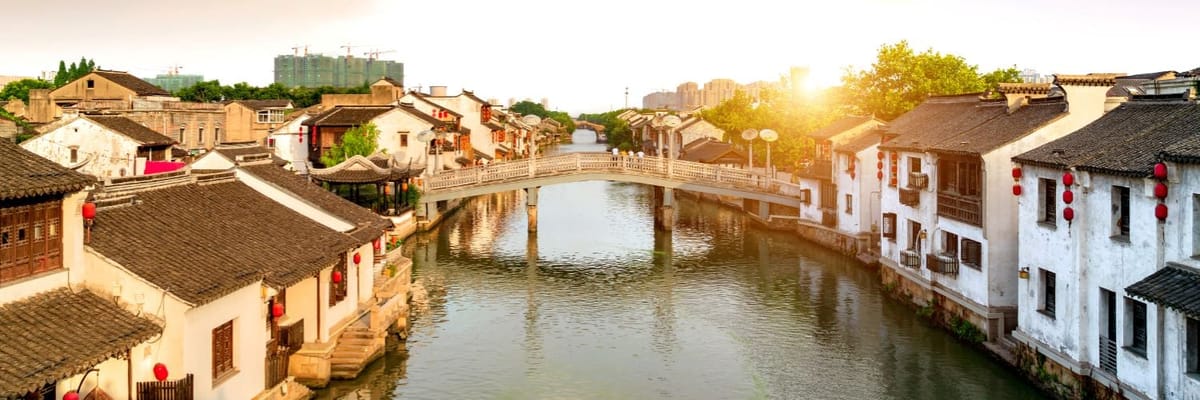
Liangxi sits at the centre of Wuxi—it’s the heart of the old city and often where many journeys begin. The Beijing–Hangzhou Grand Canal runs straight through the district, where the charm of this ancient waterway meets the rhythms of modern everyday life. At dusk, stroll along Nanchang Street towards Qingming Bridge: lantern lights ripple across the water while small bridges and riverside houses glow softly, perfect for an evening walk. By day, drop by Nanchan Temple and let the toll of the bells bring the city’s history into focus. From canal‑side walks to tucked‑away cafés in quiet alleys, Liangxi moves at an ‘old‑meets‑new’ rhythm that shows Wuxi at its most classic.
Binhu District
Backed by Lake Tai (Taihu) to the southwest, Binhu is where Wuxi leans into its lakeside charm. Start at Yuantouzhu (Turtle Head Isle)—often called the ‘No. 1 scenic spot on Taihu’—for sweeping bay views and misty horizons, whether you explore by boat or on foot along the shoreline. Wander through Liyuan Garden to admire classical landscaping framed by the lake, continue to the Lingshan Grand Buddha for a sense of awe, and end the evening in Nianhuawan under the glow of lanterns and the echo of temple chants. With its wide-open views and relaxed pace, Binhu offers a timeless lakeside escape.
Huishan District
Northwest of the centre, Huishan is perfect for a slow culture day. The highlight is Huishan Ancient Town, famous for its remarkable concentration of ancestral halls—one of Wuxi’s most distinctive historic quarters. Link The Second Spring Under Heaven, Jichang Garden, Huishan Temple, and nearby viewpoints on foot for an easy route that brings together mountains, gardens, and temples. Along the way, drop into local workshops to watch Huishan clay figurines being shaped and painted—and take home a handmade keepsake. From quiet lanes to temple courtyards, Huishan shows Wuxi’s understated elegance at a calm, contemplative pace.
Xishan District
To the northeast, Xishan offers a glimpse into traditional Jiangnan water‑town life. Dangkou Ancient Town preserves Ming–Qing- dynasty architecture alongside lively market streets: whitewashed walls rise straight from the canals, stone bridges arch over narrow waterways, and reflections create that classic ‘bridges‑and‑streams’ scene. By day, wander through its lanes, ancestral halls, and historic residences, noticing carved wooden doorways and bluestone paths. When night falls, lanterns flicker on and the water reflects the glowing bridge arches—perfect for a slow stroll with a photographer’s eye.
Xinwu District
To the southeast, towards Suzhou, Xinwu represents Wuxi’s modern face. Administered alongside the Wuxi High‑tech Zone, the district blends new town energy with the city’s growing industrial and technological landscape. You can still trace touches of Taibo and Wu culture here, but Xinwu is mostly about contemporary convenience: business meetings and exhibitions by day, followed by a relaxed city walk and an easy dinner by night—a side of Wuxi that looks to the future.
Nearby Areas Around Wuxi
Yixing
Under Wuxi’s administration, Yixing makes a natural extension to your trip. Its highlight is the Yixing Bamboo Sea near Hufu Town—often called the largest bamboo forest in East China—where rolling, bamboo-covered hills spill across valleys in a sea of green. Trails lead to the First Source of Taihu and the highest peak in southern Jiangsu. You can keep it to a relaxed half-day visit, or spend a full day exploring—hike for views in the morning, then wander the bamboo boardwalks before an easy ride back.
Jiangyin
Just north of Wuxi along the Yangtze River, Jiangyin adds a riverside perspective to trips centred on Taihu. Plan your visit around the Jiangyin Riverside Fortress Scenic Area, which links Huangshan Lake Park, Goose‑nose (Ebizui) Park, the Military Culture Museum, and the Crossing‑the‑Yangtze Campaign Memorial. Here you’ll find expansive river views alongside a glimpse into modern military history. If time allows, consider adding Huaxi Village, a well-known nearby stop.
Shanghai
As Wuxi’s powerhouse neighbour, Shanghai pairs naturally for a two‑city itinerary. Let Shanghai bring the energy of a global metropolis while Wuxi offers the calm of Taihu landscapes and the heritage of the Grand Canal—the contrast works beautifully. Shanghai also serves well as an international gateway, making it a convenient entry or exit point when travelling to and from Wuxi.
Suzhou
Located just east of Wuxi with easy transport connections, Suzhou is famed for its classical gardens—such as the Humble Administrator’s Garden and the Lingering Garden—both UNESCO World Heritage sites. It’s easy to plan a balanced itinerary: spend one day exploring Wuxi’s landscapes around Taihu and the Grand Canal for sweeping views, then head to Suzhou the next day for intricate gardens and charming old‑town lanes.
Yangzhou
Yangzhou is about 50–60 minutes from Wuxi by high‑speed rail, making it an easy and rewarding day trip. Focus on Slender West Lake, Daming Temple, and Dongguan Street to experience a mix of lakeside gardens, historic temples, and lively old‑street culture. Together they add another interesting touch to your Wuxi journey.
Recommended Attractions and Activities in Wuxi
Experience Taihu scenery across the seasons at Yuantouzhu
In spring, Changchun Bridge takes the centre stage—cherry blossoms gather like clouds and their reflections ripple across the lake, creating the perfect setting for a seasonal photo walk. In winter, hop on a boat out onto Taihu to watch and feed red‑billed gulls—sunset shots with flocks gliding through the frame feel wonderfully immersive. Stay by the bridge as the sun sets; after dark, the lakeshore turns soft and quiet. Refuel with Yulan cakes and Guangfu Temple vegetarian noodles, before enjoying an easy stroll.
Wander Liyuan’s gardens and borrowed scenery
Liyuan Garden showcases the refined artistry of Jiangnan garden design, where paths are carefully arranged so that every few steps reveal a new scene. Borrowed scenery and framed views unfold one after another. Walk along the Thousand-Step Corridor and pause at the Four-Seasons Pavilion; photograph through lattice and moon windows to capture that classic ‘a new scene with every step’ feeling. You can also cruise on Lihu to see causeways, pavilions, and rockeries up close—and their reflections on the water. Continue along the shore through Nandi Chunxiao and Chengbo Dieying to experience the rhythm of a classic waterside garden. Afterwards, keep it local with Taihu lake dishes such as scrambled eggs with silverfish or steamed whitefish—fresh, light flavours that match the scenery perfectly.
Soak up Nanchang Street’s canal nights
When night falls, lights flicker on along the ancient canal beside Nanchang Street. White walls and grey tiles glow under warm lanterns, while reflections stretch across the water like a living painting—perfect for an evening stroll. Hop on a canal cruise and frame photos around Qingming Bridge, where archways, lanes, and lamplight come together in a classic Jiangnan waterside scene. Warm up with local favourites like sizzling eel in scallion oil, braised spareribs, and piping-hot plum blossom cakes before calling it a night.
Explore industrial heritage reborn at Canal Hub 1958
Centred around Canal Hub 1958, this revitalised district preserves the original structures of Wuxi Steel Plants No. 1 & 3 while introducing art museums, cultural venues, and lively waterfront streets. The result is a fascinating blend of industrial heritage and contemporary urban life. Wander through spaces like the Skyline Art Museum and Cultural Valley to experience the dialogue between historic factory architecture and modern design. It’s an excellent stop after visiting Nanchang Street and Qingming Bridge, offering a fresh perspective on Wuxi’s cultural renewal.
Pair Nanchan Temple with the food street
Set by the ancient canal, Nanchan Temple dates to the Southern Dynasties and carries a deep religious and cultural legacy. The Miaoguang Pagoda stands as its most remarkable landmark. Outside the temple, the pedestrian zone buzzes with food stalls and local shops—quiet within the temple, bustling just beyond its gates. Visit in the late afternoon: spend some time inside the temple, then drift out to the food street for a casual dinner as the evening lights come on. From here, it’s an easy walk to Nanchang Street and Qingming Bridge for a classic canal-side night stroll.
Embrace Jiangnan at its best in spring and autumn
Spring and autumn are Wuxi’s golden travel seasons, when the weather is comfortable and scenery at its best. Spring (around March to May) brings fresh greenery and blooming flowers; cherry blossoms at Yuantouzhu usually peak from late March to early April, creating a pink‑and-white backdrop set against Taihu and Changchun Bridge. Autumn (around September to November) offers crisp air and clear sky—perfect for leisure garden visits and lakeside walks framed by vivid seasonal colour. As evening falls, the canal route from Nanchang Street to Qingming Bridge, along with the Lihu shoreline, creates a city nightscape that captures the unique charm of “Autumn in Jiangnan.”
Make a mountain‑and‑forest escape to Yixing
Just outside Wuxi, Yixing makes an easy near-city excursion. The highlight is the Yixing Bamboo Sea around Hufu Town—often called the “No.1 bamboo sea in East China.” Rolling bamboo hills meet quiet valleys to create a sweeping green vista, and a cableway offers panoramic views from above. Trails also lead to the First Source of Taihu and the highest peak in southern Jiangsu, making it easy to choose between a relaxed half-day walk or a full-day hike. Shaded paths, fresh air, and an easy return to Wuxi make it a refreshing nature escape.
Spend a riverside culture day in Jiangyin
Located north of Wuxi along the Yangtze River, Jiangyin offers a different perspective beyond Taihu’s lake scenery. Plan your visit around the Jiangyin Riverside Fortress Scenic Area, which connects Huangshan Lake Park, Goose-nose Park, the Military Culture Museum, and the Crossing-the-Yangtze Campaign Memorial. The route combines expansive river views with a compelling account of modern military history. If time allows, extend your trip to Huaxi Village, a popular stop on many Jiangyin itineraries.
Wuxi Food and Signature Snacks Recommendations
Wuxi cuisine, also known as Xibang cuisine, blends the freshwater produce of Jiangnan with local cooking techniques. It is known for its gentle sweetness, skilful use of freshwater produce, and glossy soy‑braised dishes—often described as ‘salty up front, sweet on the finish.’ Sampling these local flavours is an essential part of any visit.
- Wuxi Soup Dumplings (Xiaolongbao) – Thin skins filled with rich broth and delicately sweet meat filling.
- Sanfengqiao Braised Spare Ribs – Tender ribs coated in a glossy soy-caramel glaze balancing sweet and savoury flavours.
- Clear-broth Oil-Simmered Gluten – Hollow gluten puffs simmered in broth until fully infused, light and springy in texture.
- Sizzled Eel in Aromatic Oil – Silky eel strips finished with sizzling hot oil to release the fragrance of the sauce.
- Liangxi Crispy Eel – Deep-fried eel tossed in a sweet-and-sour glaze, crisp outside and tender inside.
- Mirror-Box Tofu – Stuffed tofu fried until golden, crisp outside with a soft savoury filling.
- Taihu’s “Three Whites” – Silverfish, whitefish, and white shrimp from Lake Tai, usually steamed or lightly stir-fried to highlight their natural sweetness.
- Yulan Cake – Soft, glutinous cakes with a delicate aroma, often topped with osmanthus and a light dusting of sugar.
Wuxi Transport Guide
The metro is the easiest way to get around Wuxi. Lines 1–4 and the inter-city S1 line cover the main urban districts, Taihu New City, and the Jiangyin direction, connecting key transport hubs such as Wuxi Railway Station, Wuxi East High-Speed Railway Station, and Shuofang Airport. QR-code ticketing and distance-based fares make travelling simple. A comprehensive bus network works well for shorter journeys and local transfers. If arriving from other cities, most travellers use Wuxi Railway Station (downtown) or Wuxi East Station (the main high-speed rail hub) before switching to the metro or taking a taxi. Taxis and ride-hailing services are widely available, even late at night. For a more scenic option, consider a Jiangnan Ancient Canal cruise from the Nanchan Temple or Qingming Bridge piers, linking classic stretches such as Nanchang Street and Qingming Bridge.
Wuxi's Weather
Wuxi has a subtropical monsoon climate with four distinct seasons and relatively high rainfall. Winters are typically damp and chilly, while summers are hot and humid. Spring brings mild but changeable weather with occasional rain, so it’s a good idea to pack a light jacket and a foldable umbrella. Shoes with good grip can be helpful, and it’s wise to protect cameras and electronics from moisture. Summer coincides with the region’s “plum rain” season and can feel quite muggy. Wear breathable fabrics, bring sun protection and insect repellent, and keep flexible plans in case of sudden afternoon showers. Autumn is crisp and clear—ideal for walking, cycling, and exploring lakeside scenery. Mornings and evenings can be cooler, so having a light layer on hand is recommended. Winter’s damp cold can feel chillier than the thermometer suggests, so dress in layers with an insulating mid-layer, a windproof jacket, and warm shoes.
Wuxi Travel Information
Currency
Renminbi Yuan (CNY)
Electricity
220V 50Hz
Language
Chinese
Timezone
UTC+8
Tel code
+86
FAQ
How long is the flight time between Hong Kong and Wuxi?
The average flight time between Hong Kong and Beijing is around 2 hours 30 minutes.
What's the weather like in Wuxi?
Wuxi has a subtropical monsoon climate with an average annual temperature of around 16 °C. Summers are hot and rainy, while winters are damp and chilly.
Where is Wuxi located in the Chinese Mainland?
Wuxi is located in the eastern part of the Chinese Mainland, in the southern part of Jiangsu Province within the Yangtze River Delta. It sits between Lake Tai (Taihu) to the south and the Yangtze River to the north, bordering Suzhou to the east and Changzhou to the west, and lies between the major cities of Nanjing and Shanghai.